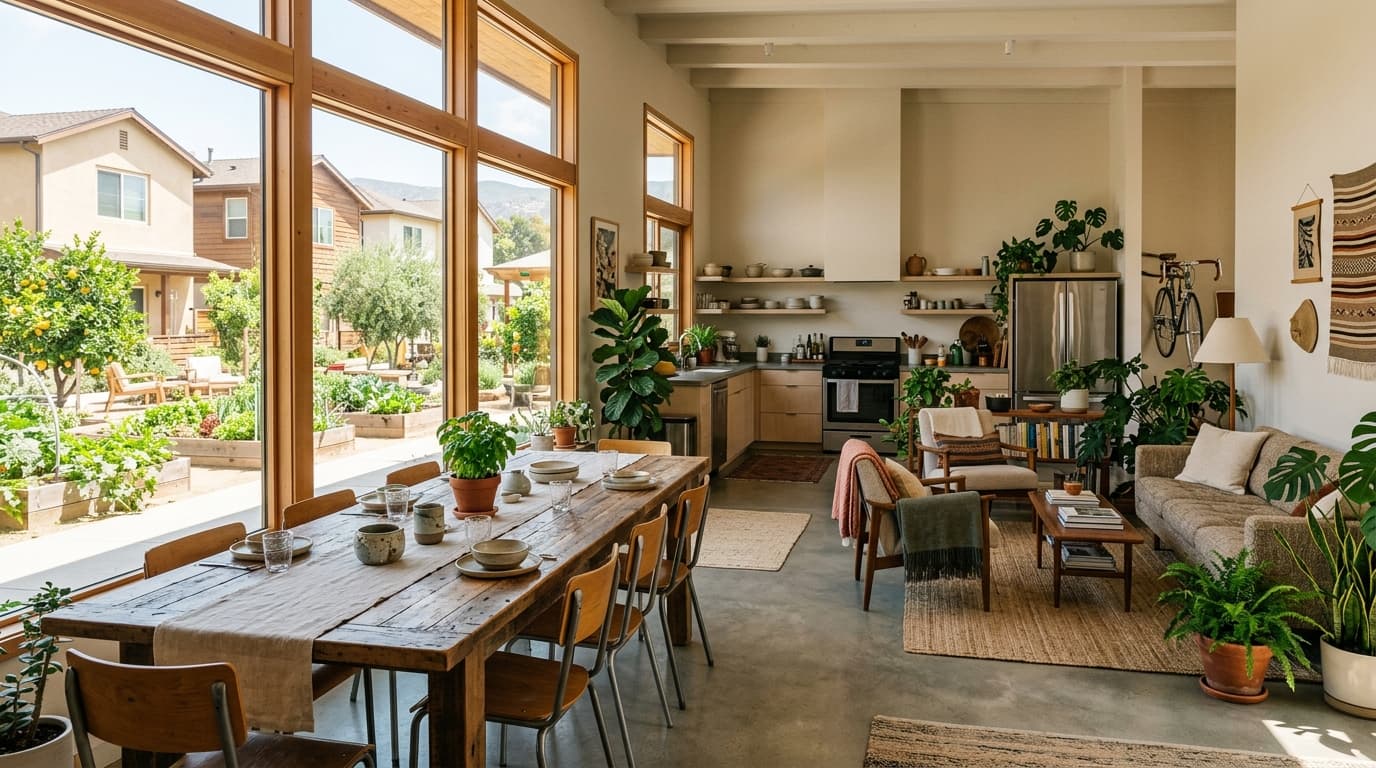
Picture a city street at six in the evening. Thousands of windows light up, and behind many of them, someone is eating dinner alone. Cities put people close together, yet closeness is not the same as connection. A widely cited figure holds that 50% of Americans feel isolated, and urban renters and young professionals often describe the feeling most sharply. It is a quiet problem, and it deserves a design-minded answer.
Why isolation is a housing issue
Loneliness is usually discussed as a personal matter, but the buildings we live in shape our habits more than we notice. A typical apartment is built as a sealed box: one door, one hallway, one elevator ride with eyes on the floor numbers. Nothing in that layout invites a conversation.
Research on loneliness suggests it can weigh on sleep, mood and overall well-being, and many health professionals treat it as a serious concern. We are not doctors, and we will not pretend a floor plan can cure anything. What we can say is that the places where we live either make connection easier or make it harder.
What co-living changes
Co-living starts from a simple idea: private space for rest, shared space for life. Each resident has their own bedroom, while kitchens, lounges, workspaces and courtyards are shared by the household or building. The shared areas are not an afterthought. They are the heart of the plan.
Done well, this gives people three things that a conventional lease rarely offers:
- Easy, low-pressure contact. Running into a neighbor at the stove is far gentler than knocking on a stranger's door.
- Shared routines. A weekly dinner or a Sunday coffee turns a name on a mailbox into a familiar face.
- A softer landing. Moving to a new city is easier when someone nearby can point out the best grocery store or the quickest bus.
Belonging by design
At Global Estate Hub Societies, we think about belonging the way an architect thinks about light: it has to be planned in from the beginning. A few design choices make an outsized difference.
- Put the kitchen where people pass. A kitchen tucked beside the entry gets used. One hidden at the back gets ignored.
- Offer more than one way to gather. Some evenings call for a big table, others for a quiet reading nook. Choice lets everyone take part at their own pace.
- Protect privacy fiercely. Good shared living depends on good private living. Soundproof walls and a door that locks are part of community, not opposed to it.
- Welcome everyone. Our motto, "Building Wealth, Bridging Worlds, Embracing Everyone," is a standard for how homes are offered and how residents are treated. Belonging only counts if it is open to all.
What co-living is not
It is not a dormitory, and it is not a cure-all. Some people thrive in solitude, and that is perfectly fine. Co-living is simply an option for the many who want a home that feels less empty without giving up their own space. Because every household is different, we encourage anyone weighing a move to visit, ask questions, and read the lease terms carefully. Choosing where to live is a personal and financial decision, so consult a licensed professional if you need guidance on your own situation.
Community as a long-term investment
Our mission is "Real Estate Reimagined. Communities Reborn." Reimagining real estate means asking what a building is for. A property can generate returns and still be a place where people feel known. We see no conflict between the two. Neighborhoods with strong ties tend to look after their homes, their streets and one another, and that is good for residents and owners alike.
As a public charity, we share what we learn rather than keeping it to ourselves. That is why we put our thinking on co-living into a written whitepaper, along with practical ideas for communities, builders and renters who want to try a different model.
Take the next step
If the idea of a home designed around connection speaks to you, we would love to have you along as we keep learning. Read our Co-Living Whitepaper and join our community newsletter to follow what we are building and how you can take part.