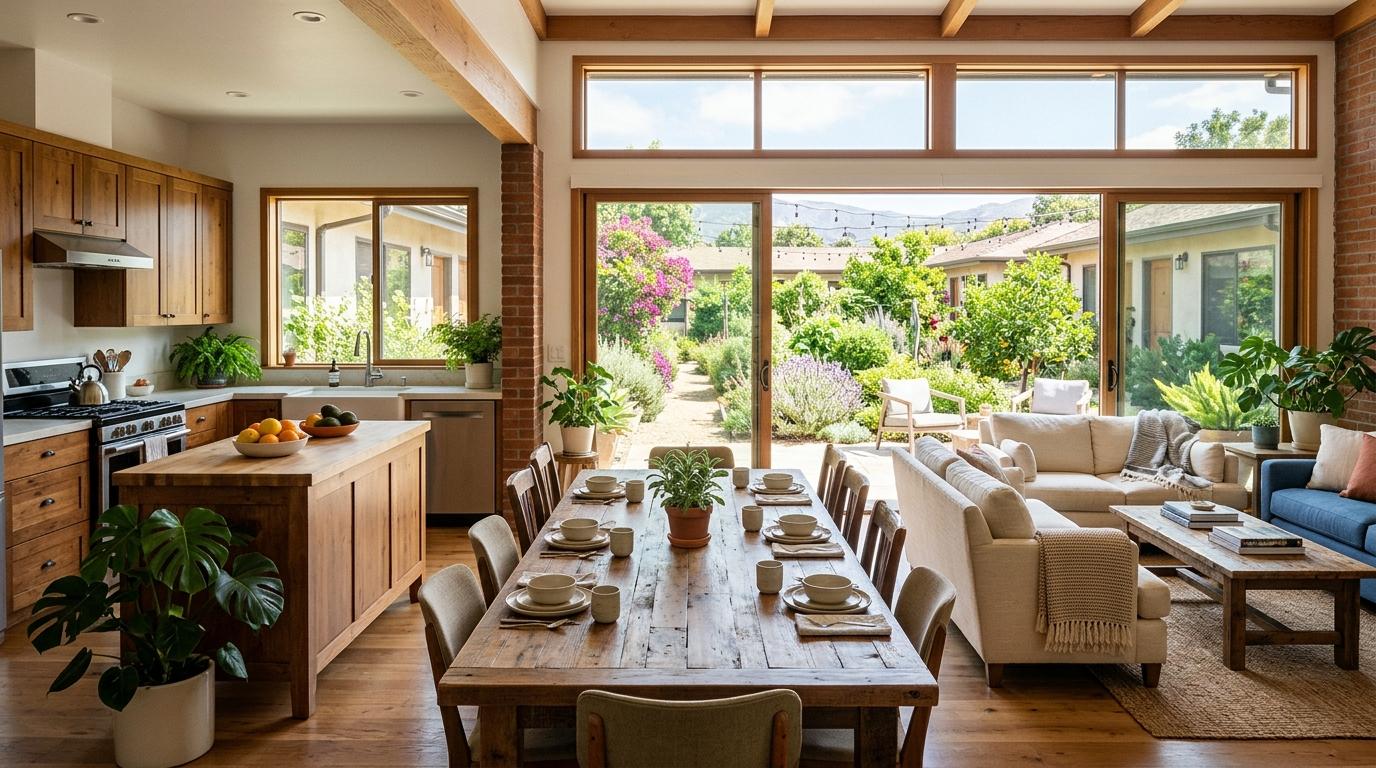
Loneliness can be quiet. It rarely announces itself, and it can settle into a household slowly: fewer visitors, fewer conversations, a calendar that grows emptier over time. Many older adults experience this, and many adult children feel worried, and sometimes guilty, when they cannot be there as often as they would like.
Research suggests that social connection matters for health and wellbeing at every age, and that long stretches of isolation can take a toll. Housing, it turns out, can be part of the answer. The way we arrange where and how we live can either keep us apart or bring us together.
What Intergenerational Co-Living Means
Intergenerational co-living is a housing approach in which people of different ages share a community, and often some shared spaces, while keeping their own private living areas. Older adults, working professionals, students and young families can all be part of the mix, depending on how a community is designed.
The idea is not new. For most of history, generations lived near one another and relied on each other. Modern life scattered many of us across cities and time zones, and co-living is one way to rebuild some of that closeness with intention.
What Each Generation Can Offer
When it works well, the exchange runs in both directions. Without making promises about any individual's experience, communities like this often create chances for:
- Shared stories. Older residents carry memories, skills and perspective that others may not find anywhere else.
- Mutual help. A younger neighbor might assist with technology or errands, while an older neighbor offers a listening ear or a hand with a recipe.
- Everyday company. Shared meals, gardens or game nights make spontaneous conversation easier.
- A sense of purpose. Being needed is one of the quiet ingredients of a good life.
These benefits are possibilities, not certainties. People thrive in different environments, and participation should always be a free and welcome choice.
Designing for Dignity and Choice
Good intentions need good design. A thoughtful community respects privacy and independence first. That can mean private entrances and bathrooms alongside shared kitchens or lounges, clear paths and well-lit spaces, and layouts that accommodate changing mobility needs. Residents should decide how much they join in, and some days they may want solitude.
Fair housing principles guide how we think about all of this. Housing opportunities should be open on the same terms to everyone who qualifies, and we aim to communicate openly about accessibility features and reasonable accommodations so that people can make informed decisions.
A Note for Families
If you are an adult child supporting an aging parent, you are probably balancing many concerns: safety, cost, independence, and your own limited time. A co-living community is not the right fit for every family, and it is not a replacement for medical or personal care. Many families find it helpful to visit together, ask detailed questions about services and costs, and talk openly with a doctor or elder-care advisor about what level of support makes sense.
For seniors themselves, the most important voice is yours. What matters to you? Quiet mornings, a garden, grandchildren nearby, a neighbor who plays chess? Starting from your own priorities helps you judge whether a community suits you.
Why GEH Cares
At Global Estate Hub Societies, our mission is "Real Estate Reimagined. Communities Reborn." Ending social isolation is part of what we mean by rebirth. A home should be more than walls and a roof. It should be a place where a person is known by name and noticed when they are missing.
We are exploring and developing community models that put connection at the center, and we want to learn from older adults, families and elder advocates as we go. If you are curious about what we have in mind, Learn About GEH Senior Community Hubs.