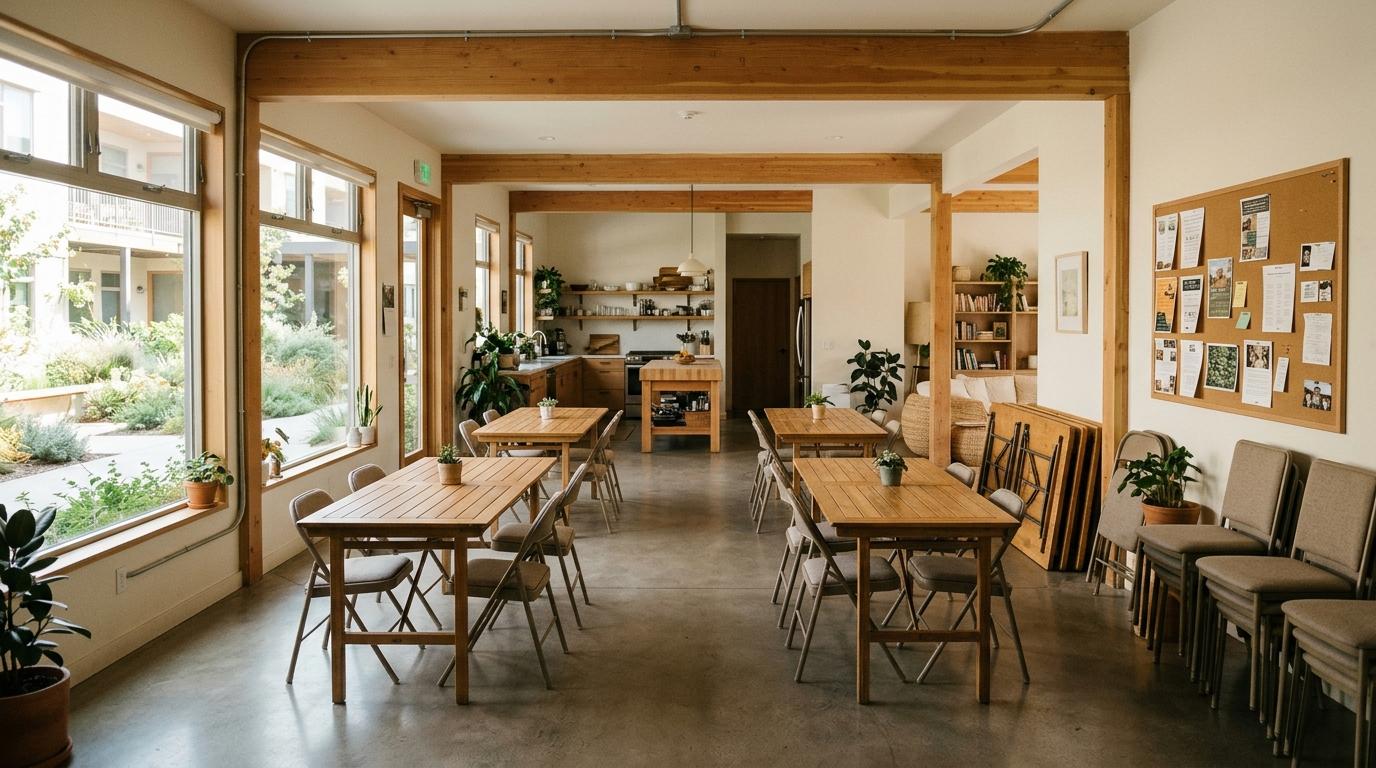
Resilient neighborhoods do not happen by accident. They are built from familiar faces, shared spaces and habits of looking out for one another. When a storm hits, a power line falls or a family needs a hand, the strength of those connections often matters as much as any official plan.
For local officials, neighborhood associations and community organizers, one question keeps coming up: where do people gather? Increasingly, we think a well-run co-living hub can be part of the answer.
A Hub Is Not an Island
Some shared housing can feel closed off from its surroundings. Our goal is the opposite. A GEH co-living hub is designed to be a good neighbor first, a place with the space, the people and the willingness to contribute to the surrounding blocks.
That means thinking beyond residents. A common room, a large kitchen or an outdoor area can serve the whole neighborhood when it is managed thoughtfully, with respect for the people who live there and for neighbors who live nearby.
What a Neighborhood Anchor Can Offer
Every community has different needs, and the best programming comes from listening. Here are some of the ways a hub can help.
- Neighborhood events: meetings, potlucks, seasonal gatherings and block association get-togethers.
- Local workshops: practical sessions on topics such as budgeting, home maintenance, gardening or technology basics, led by qualified local partners.
- Meeting space: a reliable room for community organizers who struggle to find affordable venues.
- Resource sharing: a place to coordinate donation drives or share information from local agencies.
All events are open to neighbors of every background, and we welcome everyone in the spirit of Embracing Everyone.
Preparing for Hard Days
Emergencies test a neighborhood. A hub that already knows its neighbors can be a useful point of coordination when conditions are difficult. In general terms, that might include:
- Serving as a gathering point where people can check in and share information.
- Working with local officials and established relief organizations, not replacing them.
- Helping neighbors learn basic preparedness steps in advance.
- Keeping a current list of local resources and contacts.
We are not an emergency agency, and we will not pretend to be one. Official emergency services lead in a crisis, and our role is to support them and to strengthen the community ties that make everyone's response easier.
Good programming also stays modest. A single well-run monthly gathering that neighbors trust is worth more than an ambitious calendar nobody can sustain. We would rather start small, listen closely and grow with the community than arrive with a fixed agenda.
Why Co-Living Fits This Role
Co-living is already built around shared space and shared responsibility. Residents are used to coordinating, communicating and looking out for one another. That habit of cooperation extends naturally to the neighborhood. People who feel connected at home tend to engage more with the world outside their door.
Research on community life suggests that social ties can help neighborhoods weather difficult times, and isolation can make them harder. By reducing loneliness inside the hub, we also help build the relationships that serve the wider area.
Working With Local Partners
We believe in partnership. Local governments, associations and organizers know their communities far better than we do. We hope to learn from them, adapt to local rules, and follow permitting, safety and accessibility requirements for any gathering. Every event should be welcoming and reasonably accessible to people with disabilities.
Global Estate Hub Societies is a 501(c)(3) public charity, and our mission of Real Estate Reimagined and Communities Reborn includes the places around our properties. A building can anchor a neighborhood when the people inside open the door. If you lead an association, a civic group or a community project and need a place to gather, we would be glad to talk. Host a Neighborhood Event at GEH Hubs.