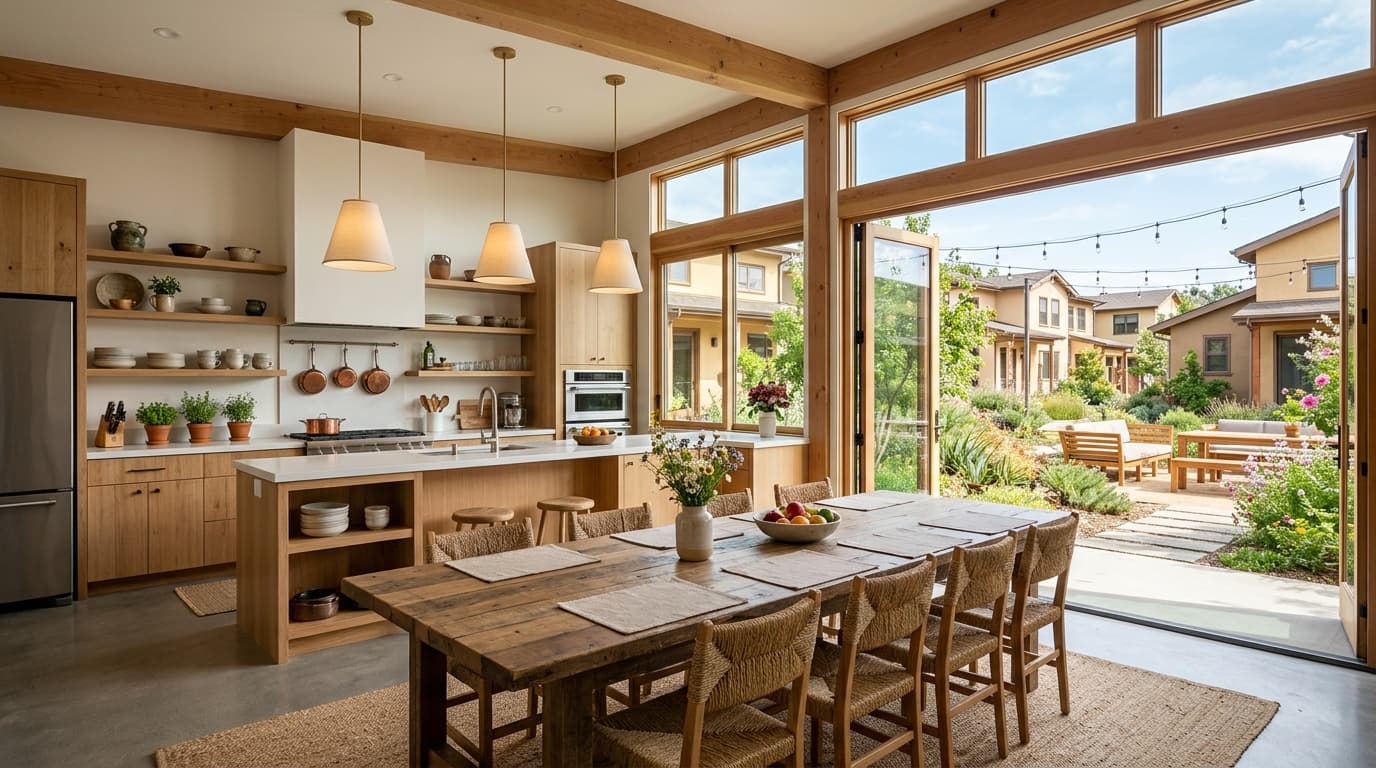
Some of the best friendships begin beside a stove. Someone asks what you are cooking, another person offers a spare onion, and a week later the same people are sharing a table. Architects and developers can plan for moments like this. A shared kitchen is not merely a cost-saving feature. When it is designed with care, it becomes the place where casual neighbors learn to look out for each other.
The idea of the gentle nudge
Designers talk about "nudges," small cues in a space that make a certain behavior a little more likely without forcing anyone. A wide, welcoming staircase invites people to take the stairs. A bench by a mailbox invites a pause. In co-living, pro-social nudges are the details that make a hello feel natural.
Nobody should feel obliged to socialize, and good design respects that. The aim is to remove obstacles and make connection an easy choice, not a requirement.
Kitchens that bring people together
The kitchen is the strongest social anchor in a shared home, and a few decisions shape whether it works.
- Location. Place it on a natural path, near the entry or between private rooms and the outdoors, so people pass through it.
- Capacity. Enough counter space, burners and refrigerator room prevent the small frustrations that turn into friction.
- Sightlines. An open layout lets a person cooking see and chat with someone at the table.
- Seating at different scales. A long table for gatherings and a counter for a quick snack let people join in at their own comfort level.
Common spaces beyond the kitchen
Other shared areas can reinforce what the kitchen starts.
- Entry and mail areas. A bright, comfortable spot where residents cross paths daily is a quiet engine of familiarity.
- Flexible lounges. Movable furniture lets a space host a movie night one day and a study group the next.
- Outdoor rooms. A courtyard, garden or roof terrace gives neighbors a reason to linger in good weather.
- Shared workspaces. For residents who work from home, a quiet room with a door offers company without constant interruption.
Privacy is part of the design
A common mistake in shared housing is assuming more shared space automatically means more connection. In practice, people relate best when they can also retreat. Well-designed co-living includes private bedrooms that feel like true refuges, good sound control, and clear signals about when someone would like to be left alone.
Think of it as a rhythm. Time alone restores people, and that restoration is what lets them show up generously for neighbors. Spaces that respect both needs tend to feel calmer and more welcoming.
Designing for everyone. Our motto, "Building Wealth, Bridging Worlds, Embracing Everyone," applies to blueprints as much as to people. Inclusive design means thinking early about step-free routes, usable kitchens and clear signage, so that residents of different ages and abilities can use the shared spaces comfortably. It also means a welcoming culture: house guidelines that treat every resident with equal respect and a leasing process that follows fair housing principles.
A note for builders
If you are developing or planning a co-living project, local building codes, zoning and licensing rules will shape what is possible, and they vary by place. Work with licensed architects, attorneys and other qualified professionals on those specifics. Nothing here is legal or professional design advice, and results will depend on your site, your community and how a building is managed day to day.
Why this matters to us. Loneliness is a quiet burden for many city dwellers, and housing can either deepen it or help ease it. We cannot promise that a kitchen will make lifelong friends out of strangers. What we can say is that thoughtful design lowers the barriers, and that people tend to build relationships when the setting makes room for them. The long-lasting support networks that sometimes grow from these spaces are a happy result, not a guarantee.
Our mission, "Real Estate Reimagined. Communities Reborn," asks us to look at every building as an opportunity to serve the people inside it. A kitchen is a modest place to start, but it is a good one.
Build it with us
We are gathering architects, developers and community-minded renters who want to share ideas and learn from each other as co-living grows. Join the GEH Co-Living Founders Network to trade lessons, ask questions and help shape the next generation of connected homes.